
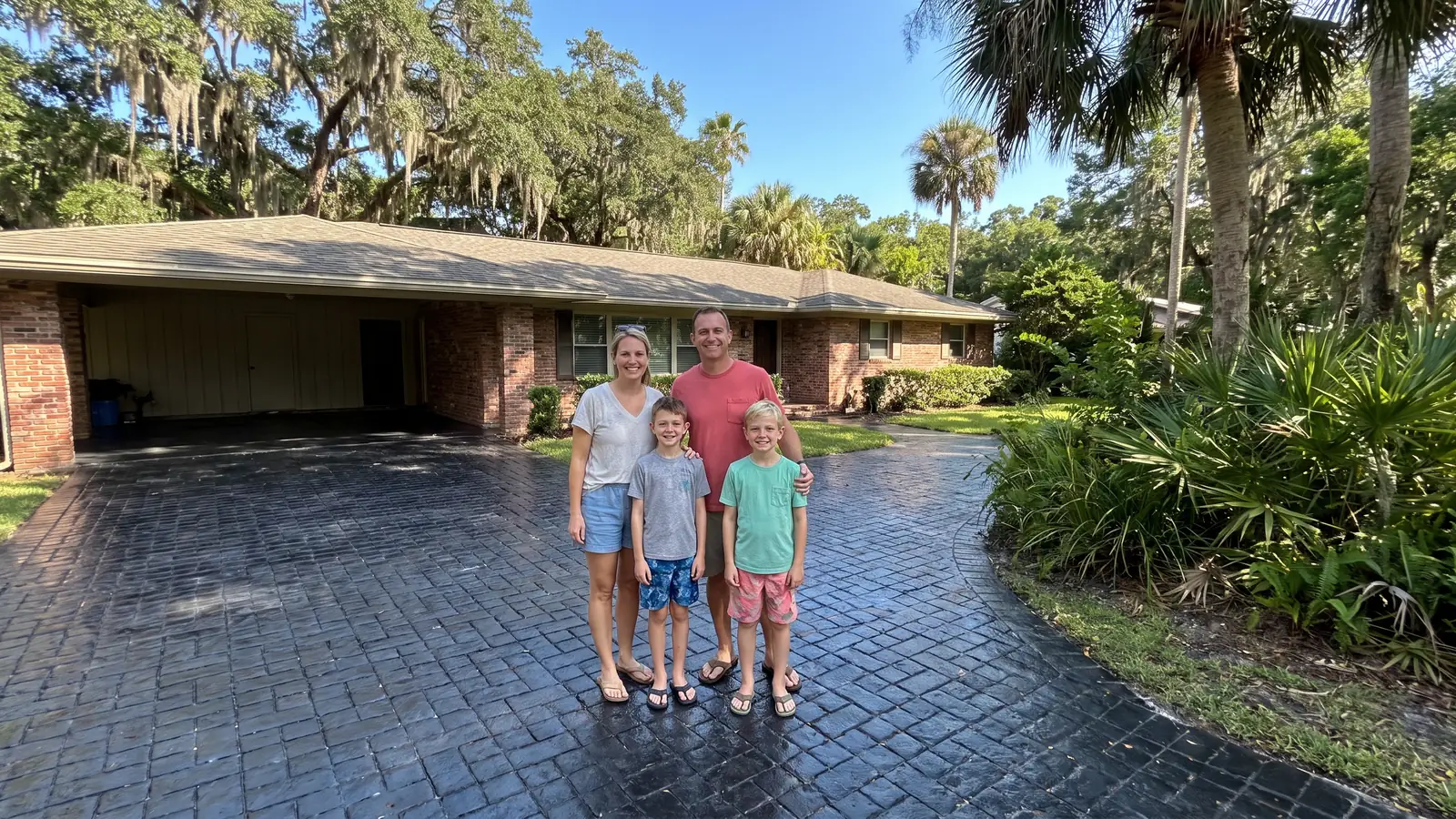
Paver sealing for Jacksonville Beach homes
Paver Sealing in Jacksonville Beach, FL
Jacksonville Beach pavers face sun, storm water and salt, so call (904) 944-6930 for a free paver sealing estimate.
- Brings out deeper paver color
- Fresh joint sand helps lock pavers in place
- Gives weeds less room to grow
- Makes the surface easier to keep clean
- Free estimate, no obligation
Request a Free Estimate
Free, no obligation.
Fast, careful paver sealing in Jacksonville Beach
Paver sealing in Jacksonville Beach is available from a local contractor, and the estimate is free. Your request is answered within 1 business day, often sooner. If a call is easier, ring (904) 944-6930 and say which street you are on.
Maybe your driveway apron looks chalky from the salt, the joints near the street are thin and a walkway corner has gone green. A wash, fresh sand and a coat put the color back and tighten the surface. Pavers across Jacksonville Beach go through the same cycle of sun, storm and salt. When you want a price for your house, you can ask for your free estimate.
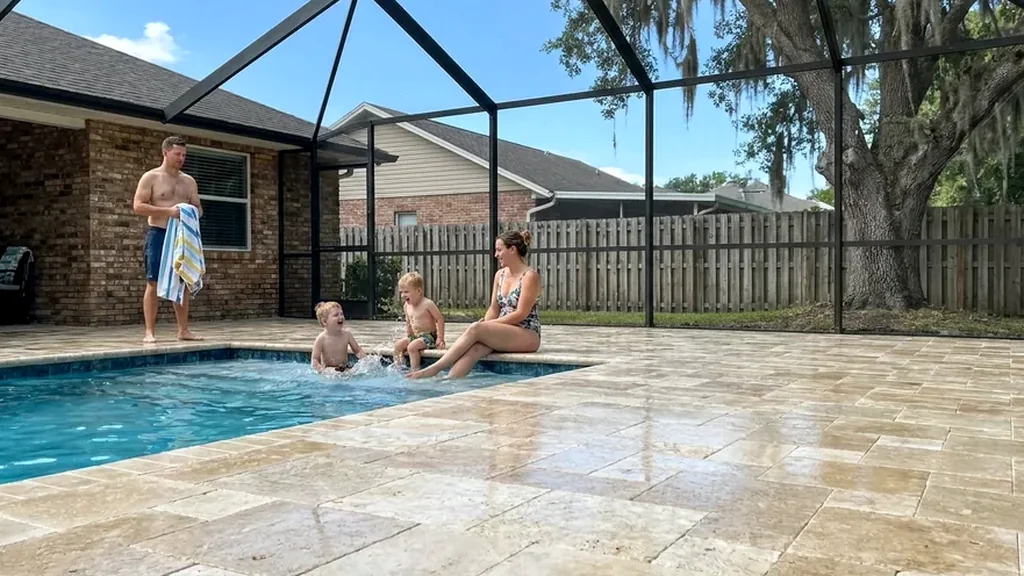
Why hire a local paver sealing contractor in Jacksonville Beach?
A beach house takes sun, storm water and salt in one season, so pavers here need more thought than the average yard. To hear what yours needs, ask for your free estimate.
Free look at the lot
A local contractor checks your Jacksonville Beach pavers in person and gives you a price before anything starts.
A price range to check
Around Northeast Florida the published price is $1.75 to $3.25 per square foot to clean, sand and seal.
Fit for small lots
Small patios and short drives cost more per square foot. The contractor will say so at the estimate.
Your choice of finish
Matte hides scuffs and salt marks. Wet look deepens color but shows wear sooner. You choose.
Get Your Free Estimate in Jacksonville Beach
Tell us about your pavers in Jacksonville Beach.
Free, no obligation
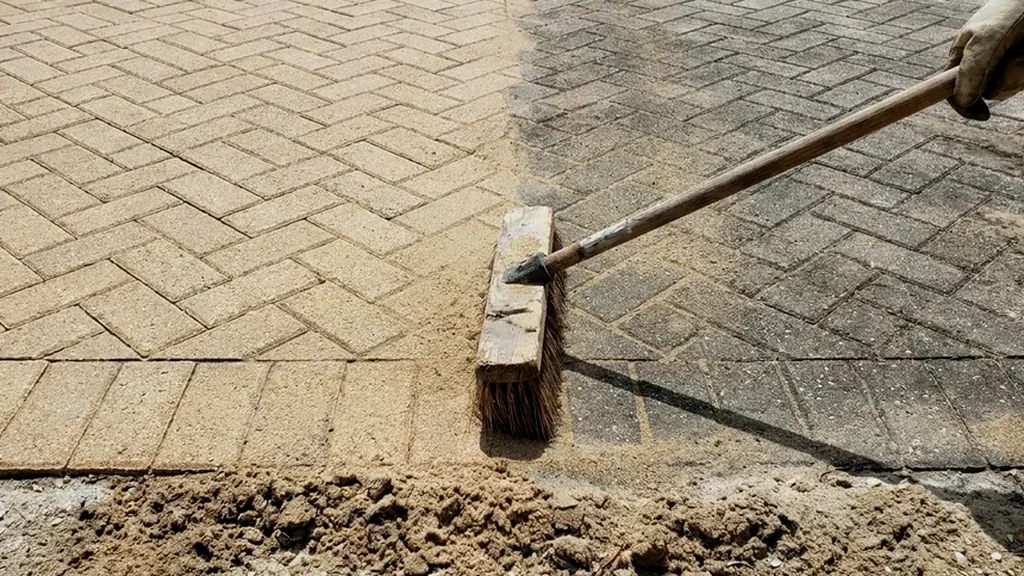
What paver problems show up most in Jacksonville Beach?
Storm water over the street and driveway
On December 6, 2016, part of First Avenue South was underwater for hours and driveways near 12th Avenue South flooded, which residents said they had come to expect. In Hurricane Matthew that October, water went over the dunes and inland to at least 2nd Street. Flood water leaves silt and drains sand out of joints. The contractor checks for both before any coat goes down. Sealer would lock silt in, so the wash has to come before the coat. Pavers that were sealed after a proper wash shed the next round more easily. The pier itself needed a three-year rebuild after Matthew and Irma, which shows how hard the coast gets hit. Your driveway takes a smaller version of the same weather.
Salt on pale pavers
A paver maker says salt travels as tiny airborne particles and crystallizes on surfaces as moisture dries. Salt residue and splash marks stand out sooner on pale pavers. A seaside driveway that looked fine in March can look dusty by summer. A sealed surface rinses clean more easily, which means less scrubbing. Routine rinsing, the same maker says, helps manage buildup near the coast. A contractor can tell you how often to hose the drive down. The whole city sits on a barrier island, so no street is far from salt water. Homes nearest the ocean and the Intracoastal feel it most.
Aprons that sit in the city right-of-way
Jacksonville Beach reports that many owners use city right-of-way beside their homes, and most of that use calls for a revocable encroachment permit. Paver aprons will be removed for the urban trail and replaced afterward. The city updated its paver driveway standards in October 2023. Ask the contractor what to do first if your apron may be touched, so you do not seal what is about to be replaced. The urban trail work may change the look of the apron edge, so the color you seal today could end up next to new pavers. It is a fair question to put to the contractor before you sign. Pavers inside your property line are yours to schedule, while the apron is shared ground. Splitting the work this way keeps your money where it will last.
Tight lots and gated streets
Single-family districts here allow 50 percent impervious surface, so yards are compact and pavers sit close to the house. One Jacksonville paver page notes that gated communities can limit contractor hours and vehicle access. Small jobs also cost more per square foot. Tell the contractor about gates, parking and access at the estimate. A short heads-up on gate codes and hours saves a wasted trip. A Southside paver page adds that shared patios, courtyards and walkways are usually managed by the association. Ask who approves work before you book.
Weeds and ants in thin joints
Wet-season rain and a daily sea breeze push sand out of unsealed joints. Weeds and ants move in where sand is thin. A Jacksonville company says sealed joint sand becomes a hard barrier to both. Refilled joints hold the field together against the next storm. Most Jacksonville Beach driveways see the same swing from dry spells to downpours, and joint sand is the first thing to feel it. Hurricane season peaks on September 10, so sand loss is often worst after the wettest months. A fall check of the joints costs little.
Do South Pablo Beach, Ocean Terrace and San Pablo Terrace need different paver care?
How do Sea Grove and South Pablo Beach differ?
A bit, since each has its own age and layout. South Pablo Beach is a coastal pocket with a walkable grid, and nearby Sea Grove has 174 homes built in the 1920s. Older homes on small lots often have pavers added later, and those come in several ages. Say which area you are in when you ask for your free estimate.
What are Ocean Terrace homes like?
Ocean Terrace dates to the early 1980s. It is mostly single-family homes of 2,250 to 3,100 square feet with a confirmed HOA, near South Beach Park. The same page adds that sealer color or a wet-look finish can need association approval. Florida law limits review to what the HOA's own documents say, so read them, then call (904) 944-6930.
What about the older San Pablo Terrace lots?
San Pablo Terrace, off Penman Road, has homes dating from 1955 to 2005, and the median year is 1963. In a check of 191 Jacksonville Beach listings, 69 percent sat outside the FEMA Special Flood Hazard Area, while some condo and marsh-side communities were mostly high risk. Ask where your home falls, since low ground changes the cleaning plan. Then ask for your free estimate.
What does paver sealing cost in Jacksonville Beach?
What moves the price near the ocean?
Published Northeast Florida prices to clean, sand and seal start at $1.75 and top out at $3.25 per square foot. In Jacksonville Beach the main things that move a quote are lot size, access and old sealer. A small lot with a gate and tight parking can cost more per square foot than a wide open drive. To see where yours lands, ask for your free estimate.
What do salt film and old sealer add?
Salt buildup and flood silt add washing time, and failed white or flaking sealer must be stripped. A pool deck usually gets a penetrating sealer, which can change the product cost. If your apron may be replaced for the urban trail, ask whether to wait on that part. Call (904) 944-6930 and the contractor can lay out the choices.
| Paved area | Typical example | Clean, sand and seal |
|---|---|---|
| 300 sq ft | Small patio or walkway | $525 to $975 |
| 600 sq ft | Two car driveway | $1,050 to $1,950 |
| 1,000 sq ft | Large driveway or pool deck | $1,750 to $3,250 |
| 1,500 sq ft | Driveway plus pool deck | $2,625 to $4,875 |
Math based on the $1.75 to $3.25 per square foot that Northeast Florida paver companies published as of November 2026. Your contractor sets the actual price after seeing the surface. Repairs, leveling and stripping failed sealer are usually extra.
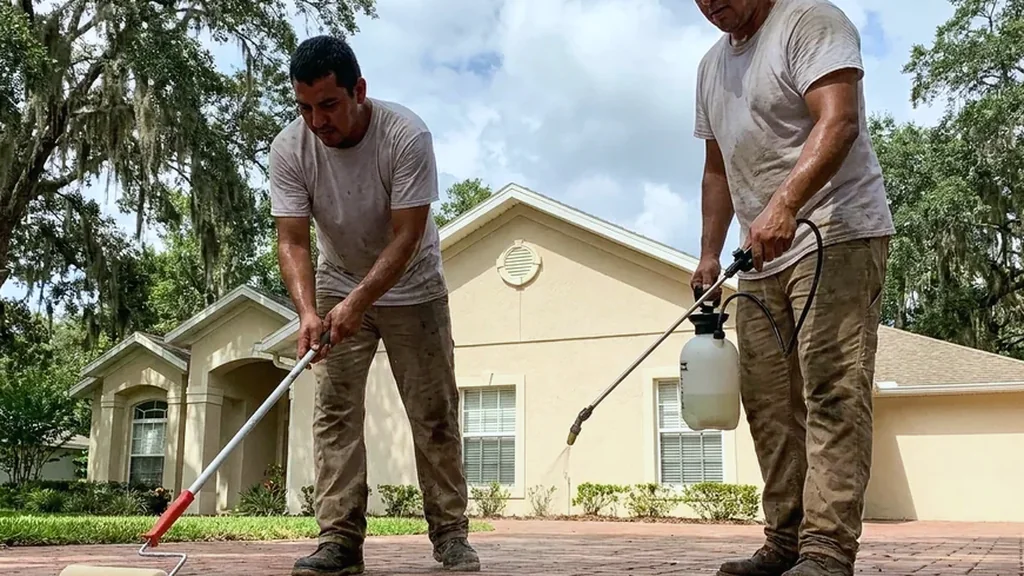
How does a paver sealing job work in Jacksonville Beach?
Look over the surface and the street edge
First comes a slow walk over your Jacksonville Beach driveway, noting where storm water runs. Sunken spots are marked, because sealing over a dip only preserves it. If part of the apron sits in city right-of-way, that is noted. The old coat is identified before any product is picked. Mention gates, parking limits, past flooding and any permit you hold for the apron.
Wash off the salt, silt and algae
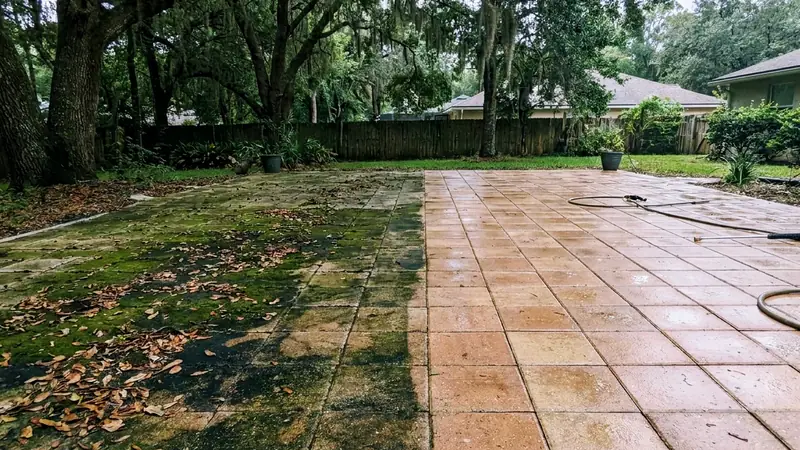
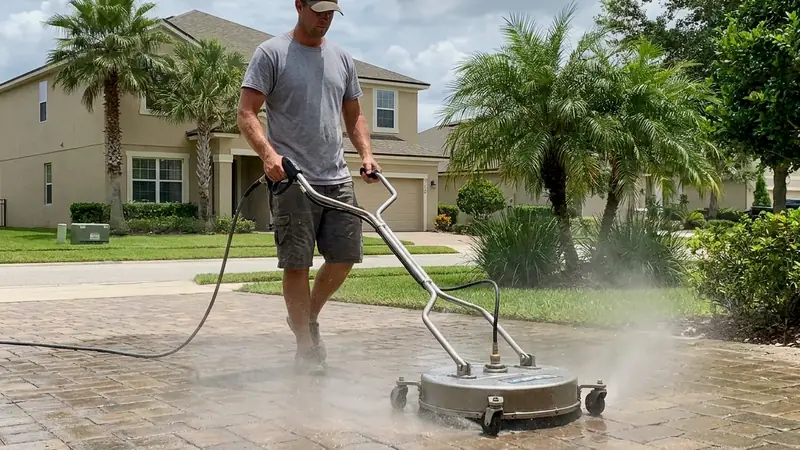
The wash lifts salt film, flood silt and green growth. The wash is run at a pressure that will not strip concrete pavers. Oil and rust get treated first. Rinse water is kept off doors and garden beds. Doing the wash right makes every later step easier. If a tree or shrub bed sits next to the pavers, it is rinsed and covered as needed.
Let it dry and refill the joints
Pavers dry fully, since a coat over damp stone can go cloudy. The wash takes joint sand out, so new sand is swept in and tamped down. Full joints keep the field tight. They also give weeds and ants less room. This step is where most of a sealed driveway's staying power comes from.
Spray, back-roll and cut in the edges
Spray passes lay the sealer down evenly, and a back-roller presses it into the joints. Thin coats cure clearer than a thick one. Edges at the garage, the door and the street get hand work. Pool decks get a penetrating product that keeps grip. A pro checks each section for coverage before moving on. Color should look the same from the curb to the garage.
Cure, then a final check together
Expect to walk on it in a few hours and to drive on it the next day. The contractor looks over the finish with you in daylight. Ask how often salt should be rinsed away as the coat gets older. Companies generally put the next coat two to five years away. Jot down the date, so you know when to check it again. If something looks uneven the next week, call the contractor back and ask for a look.
Complete paver services in Jacksonville Beach
How does a beach job start?
Work at a Jacksonville Beach home begins with a wash that clears salt film, silt and algae. Fresh joint sand comes next, because the wash takes the old sand out. The last stage is sealer, laid down in thin coats. To see the order of work for your lot, ask for your free estimate.
Which surfaces wear out first by the water?
Driveways, front walks, courtyards and pool decks each age differently near the ocean. Drives show tire scuffs, while courtyards trap salt and leaves, and pool decks take splash and sun. Say what you have when you call (904) 944-6930 and request a line item for each surface.
Sealer that sits on top or soaks in?
Two families of sealer exist. One sits on top of the stone and holds the joint sand, and the other soaks in and leaves the stone looking untouched, which is why pool decks usually get it. An old coat of the wrong type can block your choice, since the two chemistries do not mix. Ask for the product name, then ask for your free estimate.
When do dry days line up with hurricane season?
Timing comes down to dry days. Sealer needs a dry surface, and the wet season runs June to September. Hurricane season ends November 30, so late fall and winter are calmer months to plan. Cars wait roughly a day after the last coat, so ring (904) 944-6930 and choose a window.
Questions to ask before you hire
- Can you tell me the product name and coverage rate before you start?
- Does a darker, wet look come with the sealer you use, or can I choose a natural one?
- Can you work around my sprinklers and keep the lawn edges clean?
- Can you do a trial patch on one corner of my driveway before the full job?
- Do you wash at a low pressure so the joint sand stays where it is?
- Who decides to reschedule when storms are in the forecast?
- What do I do if I see an uneven patch a week later?
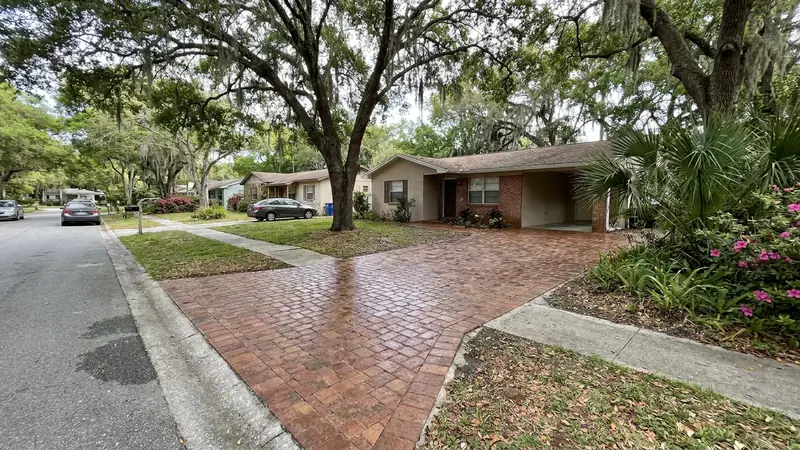
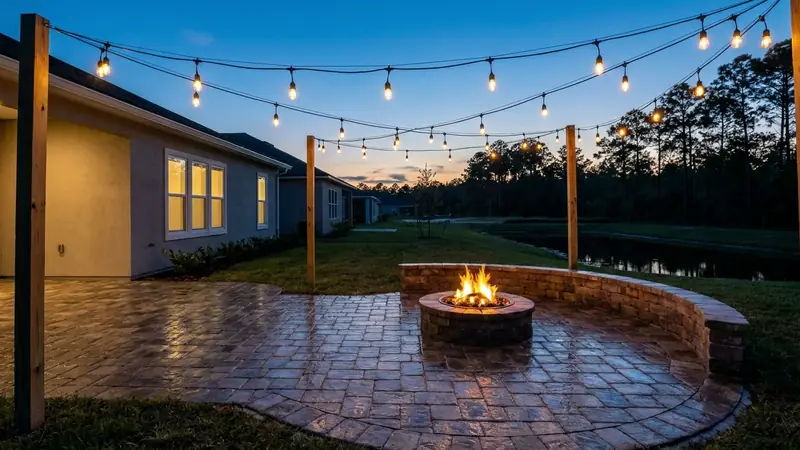
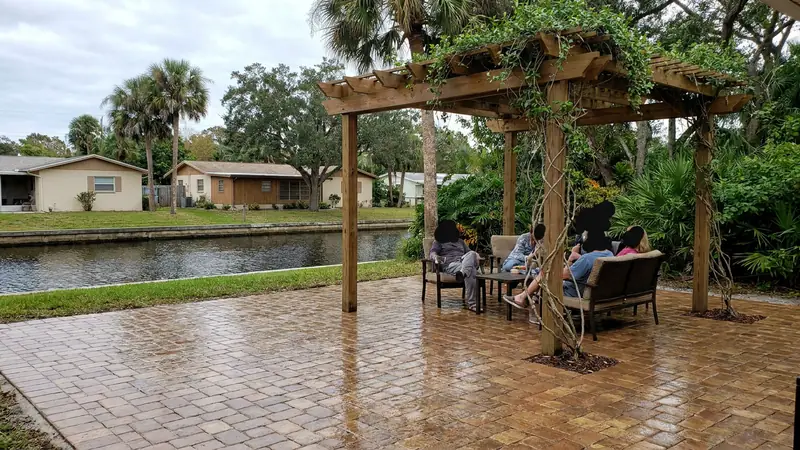
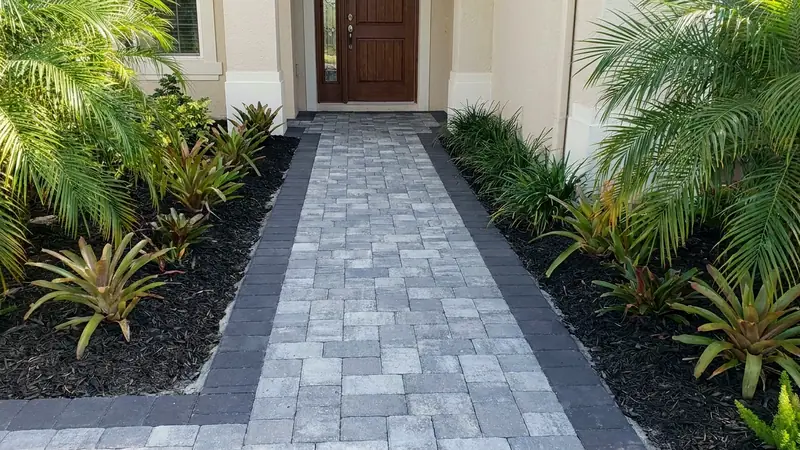
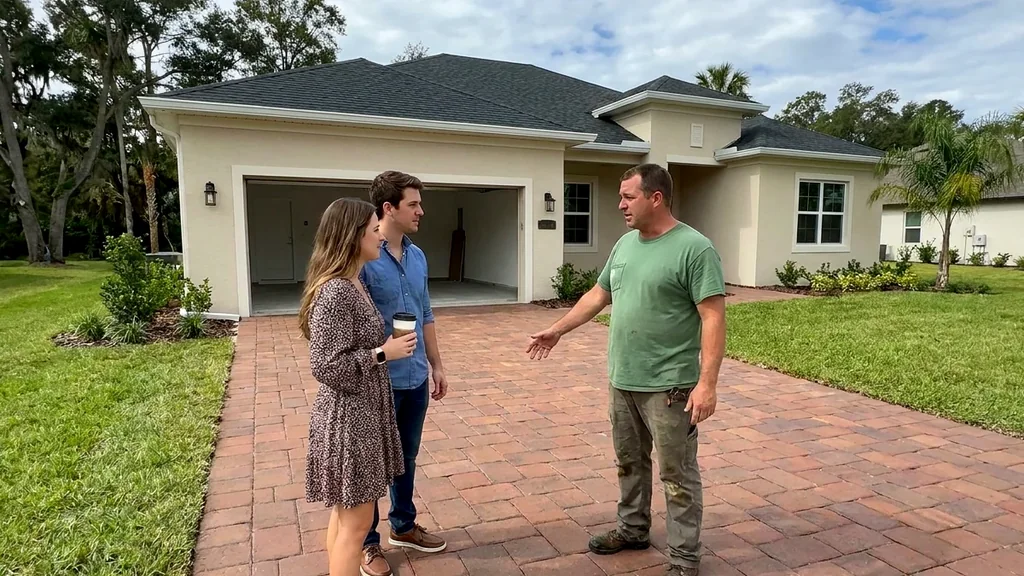
What do sealed pavers look like around Jacksonville Beach?
Why local matters in Jacksonville Beach
Why does a beach street grid matter?
Jacksonville Beach has its own street grid, its own permits and its own flood history. A contractor who works the beaches already knows how storm water moves here and how salt settles on a driveway. That cuts down on guessing at the estimate. Call (904) 944-6930 and talk through your street.
How does local knowledge help at the estimate?
Local knowledge shows up at the estimate. A pro who sees right-of-way aprons, gated lots and narrow driveways every week can spot them on yours and price them fairly. That means fewer surprises on the final bill. To start, ask for your free estimate.
Can a nearby crew shuffle around storms?
A nearby contractor can also work around the weather. Late summer storms can move a job at short notice, and someone close by can keep your place in line. Fall brings drier days, and a contractor who lives nearby will know when a clear stretch is coming. You can plan the day on the phone, then ask for your free estimate.
What is Jacksonville Beach known for?
How did Ruby become Jacksonville Beach?
The city began as a small settlement called Ruby in 1884, became Pablo Beach in 1886 and took the name Jacksonville Beach in 1925. A narrow-gauge railroad that began construction in 1883 carried people 16.54 miles from the St. Johns River to the shore. The Beaches Museum on Beach Boulevard keeps that history, so call (904) 944-6930 to ask a contractor about your block.
What changed when the pier reopened?
Today the pier is the main landmark in Jacksonville Beach. It reopened on July 6, 2022 after a three-year rebuild that left it 12 feet taller, and Latham Plaza and the Seawalk Pavilion sit nearby at 11 1st Street North. Homes close to that stretch deal with sun, wind and salt year-round. Whichever block you live on, ask for your free estimate.
Frequently Asked Questions
What is the average cost to seal pavers in Florida?
Jacksonville Beach owners can hold a quote against the published Northeast Florida range of $1.75 to $3.25 per square foot for a clean, sand and seal. In Jacksonville Beach, lot size, access and old sealer decide where you land. A free estimate gives the figure for your own surfaces. Ask for a quote that lists each surface.
What's the average price to seal pavers on a small beach lot?
The per-square-foot range is the same, but smaller projects generally cost more per square foot. Combining the driveway, walkway and patio helps. The estimate lists each surface so you can see where the money goes. Ask the contractor to quote the apron and the rest of the driveway on separate lines.
Is there a downside to sealing pavers?
Yes, a few. Wet look scuffs sooner than matte, and a coat over damp stone can cloud up. Anything left on the surface gets sealed in, so cleaning and repairs come first. On a dry day with a careful contractor the risks stay small, and matte is the safer finish for most driveways.
What does it cost to seal outdoor pavers around a pool?
A pool deck is priced by the square foot like a driveway, inside the $1.75 to $3.25 range. Pool decks in Jacksonville mostly get a penetrating sealer to keep traction, so ask for the product by name. Smaller decks may cost more per square foot.
Does salt air shorten how long sealer lasts?
It can wear a coat sooner than inland weather would. A coastal driveway may sit at the short end of the two to five years companies commonly quote between coats. A paver maker says routine rinsing helps manage salt buildup. A rinse between coats keeps the surface looking cleaner. A sealed surface also gives you something to rinse against, rather than bare stone.
Can my paver driveway apron be sealed if the city may replace it?
Ask first. The city says paver aprons will be removed for the urban trail and replaced afterward. If your apron is in line for that work, it may make sense to seal the rest and wait on the apron. Keeping the quote itemized makes the decision easier.
Can sealing be done during hurricane season?
Yes, on dry days. The season runs from June 1 to November 30, and sealer needs a dry surface. A contractor will watch the forecast and move the day if a storm is close. Late fall and winter bring the driest stretch, which makes scheduling easier.
Do I need HOA approval to seal pavers in Jacksonville Beach?
Possibly, if your community rules cover exterior finish. A Jacksonville paver page says color or a wet-look finish can need association approval. Florida law limits review to the HOA's own documents. Check your rules before you pick a color.
How soon can I use my pool deck after sealing?
People can step on it within a few hours, and cars wait about a day. Furniture can go back once the surface has cured. Ask the contractor for a time based on the product used.
Do pavers in Jacksonville Beach need sealing after a flood?
A wash and a check of the joints come first. Flood water leaves silt and can pull sand out, and a Jacksonville company says sinking and washouts are the main reason pavers fail. Once the surface is clean and the sand is back, a coat helps protect it.
Is wet look or matte better near the ocean?
Matte is the quieter pick, since salt marks, scuffs and glare all show less on it. Wet look pays off in color depth, but drive lanes wear into view sooner. Ask for a test patch and judge both in your own light.
How do I know my Jacksonville Beach pavers are ready for another coat?
Look at the color and at how water behaves. Water that stops beading is a sign the coat is thinning, and companies commonly quote two to five years between coats. A contractor can confirm at a free estimate.
Ready for a Free Estimate in Jacksonville Beach?
Call (904) 944-6930 and tell us about your pavers.
Free, no obligation