
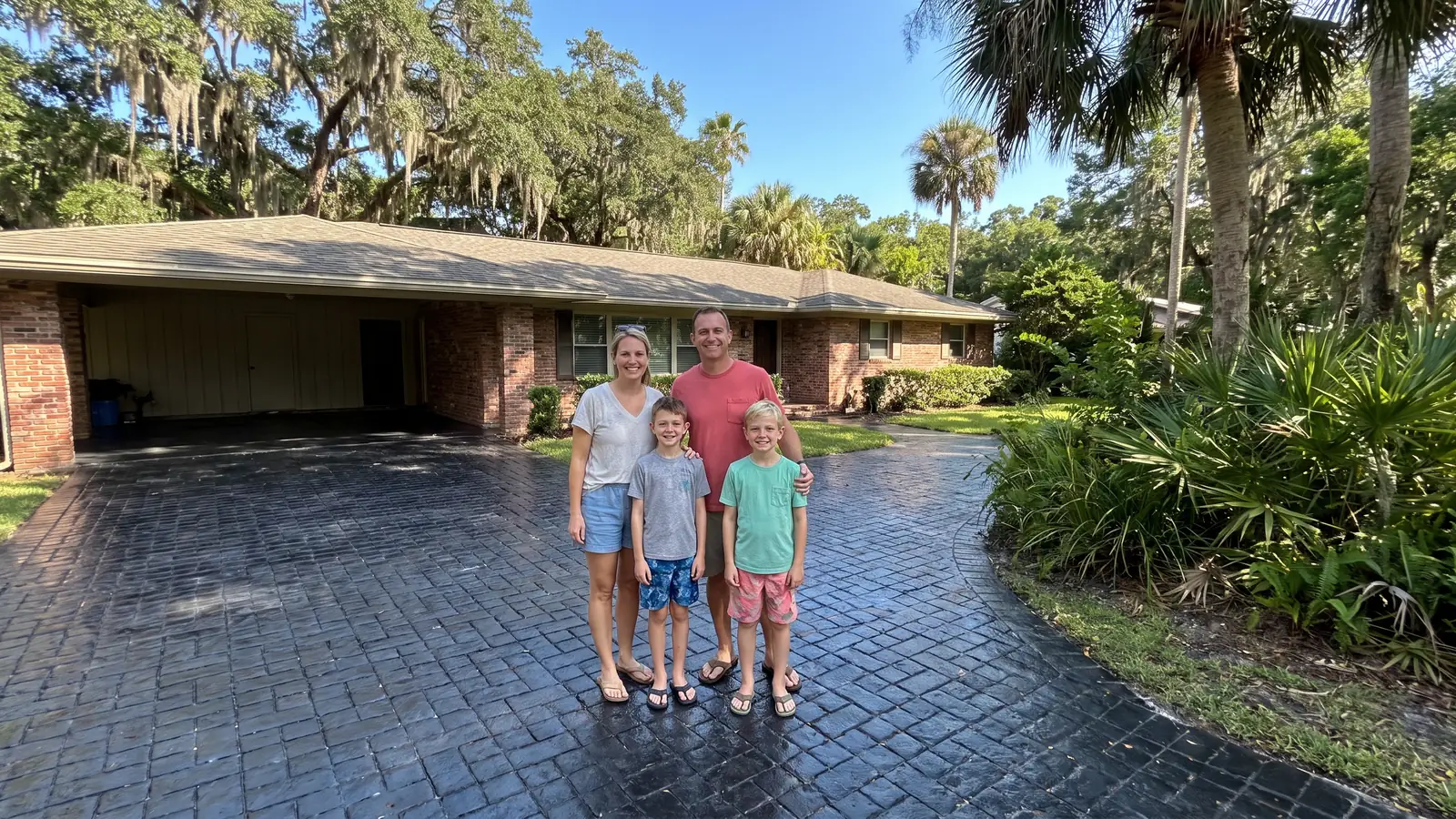
Paver sealing for Cedar Hills homes
Paver Sealing in Cedar Hills, FL
Cedar Hills ranch homes have long driveways and back patios, so call (904) 944-6930 to get both sealed on one estimate.
- Brings out deeper paver color
- Fresh joint sand helps lock pavers in place
- Gives weeds less room to grow
- Makes the surface easier to keep clean
- Free estimate, no obligation
Request a Free Estimate
Free, no obligation.
Fast, careful paver sealing in Cedar Hills
Paver sealing in Cedar Hills is available from a local contractor, and the estimate costs nothing. A reply comes within 1 business day, and most often a lot faster. If you want to talk first, call (904) 944-6930 and say which pavers you have, such as a driveway, a walkway or a patio.
Think of a ranch house with a wide front yard. The long driveway has faded in the sun, the joints along the edge are low and the back patio has a green corner near the roof line. A wash, new joint sand and a coat of sealer bring the whole run back to one color. You can ask for your free estimate to find out what it takes for your lot.
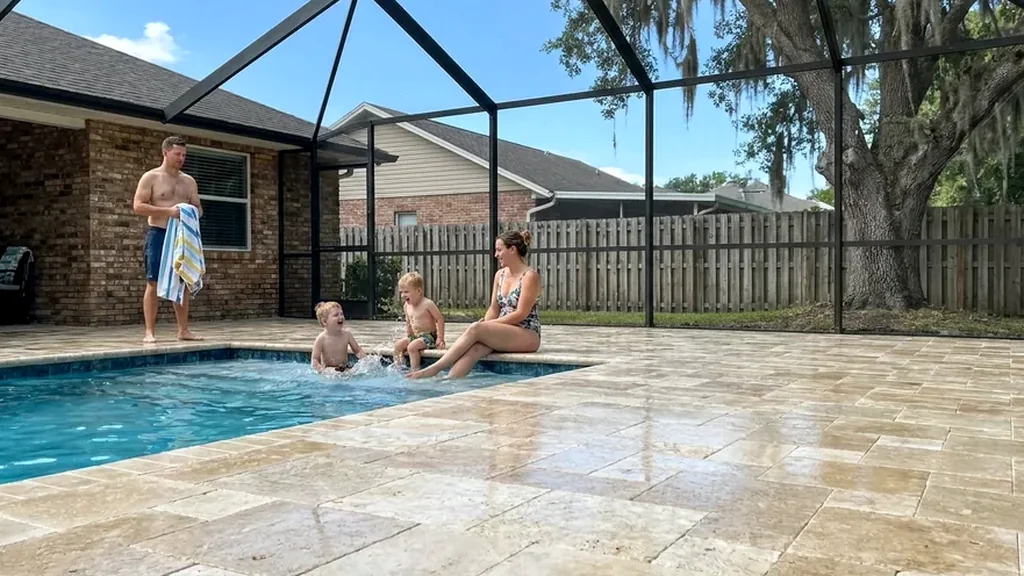
Why hire a local paver sealing contractor in Cedar Hills?
A mid-century neighborhood of ranch houses, long driveways and drainage ditches gives a paver contractor plenty to look at. If you want someone who has seen layouts like yours, ask for your free estimate.
Free estimate, no strings
A local contractor measures your Cedar Hills driveway and patio and quotes a price. Nothing is agreed until you say yes.
Price range you can check
Around Northeast Florida the published range is $1.75 to $3.25 per square foot. A long ranch driveway adds area, not a higher rate.
Matte or wet look
Matte hides scuffs better on a drive that sees daily traffic. Wet look gives deeper color and shows wear sooner.
You stay in charge
You choose the day, the finish and the surfaces. If the numbers do not suit you, you walk away. An estimate is a price, not a promise.
Get Your Free Estimate in Cedar Hills
Tell us about your pavers in Cedar Hills.
Free, no obligation
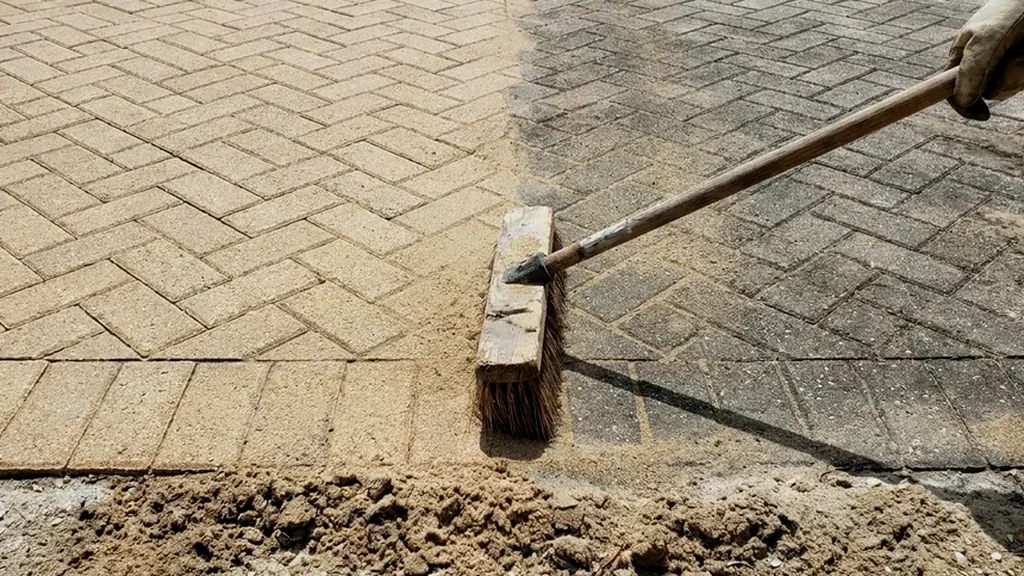
What paver problems show up most in Cedar Hills?
Water moving through ditches and canals
A published look at Cedar Hills says the neighborhood has a large network of drainage ditches and canals. Jacksonville gets about 53 inches of rain a year, and summer storms arrive fast. Pavers near a swale or a ditch edge see more splash and standing water than pavers on high ground. That water also carries grit that settles in the joints. If you can see a ditch from your drive, mention it at the estimate so the contractor knows where to look.
Ground that settles and washes out
In August 2017 a Cedar Hills homeowner told News4JAX that a blocked storm drain next door was flooding houses and causing the ground to cave in. A Jacksonville sealer puts sinking and washouts at the top of the list of paver failures. Unsealed joint sand washes out and storm water reaches the base. Low spots should be reset before a coat locks them in. A driveway that dips toward the street often has a story under it. Contractors do not fix a failing storm drain, but they can reset the pavers once the water problem is handled.
Sun on a long driveway
Lots here have large frontages and wide front setbacks, so the driveway often runs a long way in open sun. Summer highs stay near 91 degrees, which fades color on bare pavers. A sealed surface keeps its tone longer, which means the curb end and the garage end stay a match. Fading shows first on the side that gets the afternoon sun. Walkways and aprons on the same lot may fade differently, which is why a sealer coat is worth a look at every surface. A faded driveway also makes a house look tired from the street.
Algae by the patio roof line
Cedar Hills is dominated by ranch houses, which sit long and low to the ground. That puts roof edges, porches and carports close to the pavers beside them. Shade with poor airflow helps algae grow, and algae thrive in wet conditions. A wash clears it, and sealer slows its return. Furniture legs and planters leave rings on bare pavers, and a sealed finish makes those easier to wipe clean.
Pavers added in a remodel
Many Cedar Hills homes were expanded or replaced, so a patio or drive of pavers may come from a recent project. A former owner may have used a sealer you cannot name. Water-based sealer cannot go over solvent-based sealer, so the contractor tests the old coat first. Old failing sealer sometimes has to be stripped before cleaning. A new coat over an unknown one can peel within a season.
Does a 1950s Cedar Hills ranch change how pavers get sealed?
Yes, mostly because the homes are low, wide and close to the ground. Cedar Hills was built in the 1940s and 1950s, with about 3,000 brick or concrete block homes in seven neighborhoods. In Cedar Hills Estates, homes on the market were built between 1955 and 1971, and the median year is 1960. When you ask for your free estimate, mention roughly what year your house went up.
Sweetwater, near I-295 and Wilson Boulevard, was developed from 1949 to 1953, and its streets carry names like Luke, Matthew, Mark, John and Esther. Houses on blocks like these often have a short drive and a small patio. Small areas are priced by the square foot like any other, but a minimum job size can apply. Ask about it when you call (904) 944-6930.
Of the Cedar Hills Estates listings that state HOA status, 21 say there is none, and none of 33 geocoded homes sits in a FEMA flood zone. Where an association does exist, Florida law limits its review to what its declaration or guidelines say. Along the Cedar River, many houses have been expanded, so check old and new paving separately. Then ask for your free estimate.
What does paver sealing cost in Cedar Hills?
Across Northeast Florida, companies commonly publish a clean, sand and seal price of $1.75 to $3.25 per square foot. In Cedar Hills, the size of the lot does the most to move your total. A wide frontage means a long driveway, and a back patio adds area on top. To see the number for your own layout, ask for your free estimate.
Condition moves the price too. Low joint sand, algae at the roof line and old failing sealer each add time, and a ranch with several surfaces is easier to price when you list them all. A Jacksonville company says it spends about 2 to 3 hours of prep for every hour of sealing, so prep is where the money goes. Call (904) 944-6930 and the contractor can talk through what your pavers need.
| Paved area | Typical example | Clean, sand and seal |
|---|---|---|
| 300 sq ft | Small patio or walkway | $525 to $975 |
| 600 sq ft | Two car driveway | $1,050 to $1,950 |
| 1,000 sq ft | Large driveway or pool deck | $1,750 to $3,250 |
| 1,500 sq ft | Driveway plus pool deck | $2,625 to $4,875 |
Math based on the $1.75 to $3.25 per square foot that Northeast Florida paver companies published as of November 2026. Your contractor sets the actual price after seeing the surface. Repairs, leveling and stripping failed sealer are usually extra.
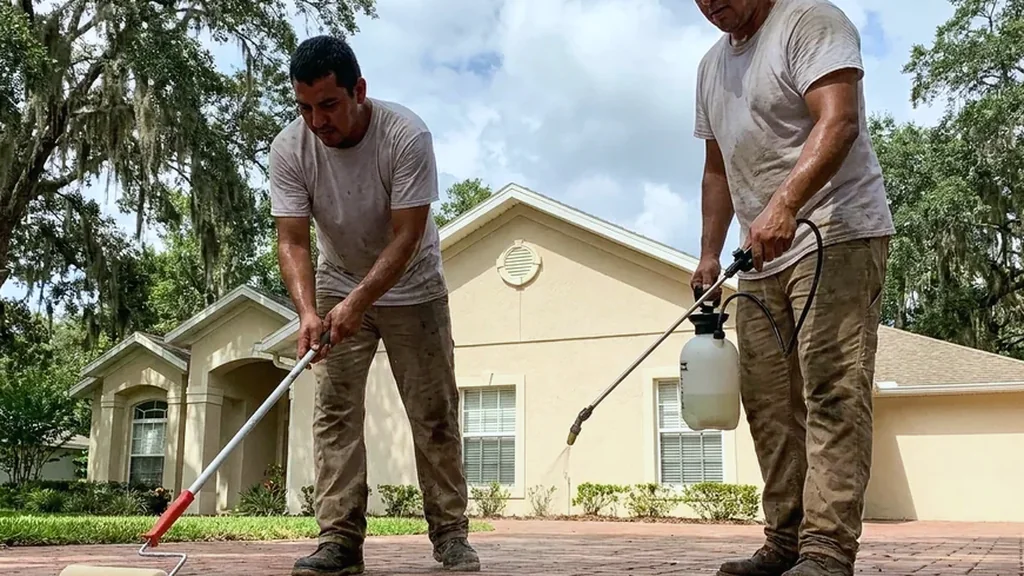
How does a paver sealing job work in Cedar Hills?
Walk the driveway, ditch line and patio
The contractor looks at where water leaves your Cedar Hills lot and where it pools. Sunken spots near the street or a swale are marked for repair. The old coat, if any, is identified before anything is sprayed. You mention any past drainage trouble. A good walk-through takes a few minutes and saves surprises on the bill.
Wash and treat the problem spots
A wash lifts sun-faded grime, algae and tire marks. Oil, rust and efflorescence get their own treatment first. Pressure stays low enough to protect the surface, since high pressure can strip concrete pavers. Rinse water is kept off the lawn edges. Doors and garage thresholds are checked so rinse water stays outside.
Dry the pavers, then refill the joints
Everything dries before sealer goes on, which can take a day or two. The wash takes joint sand with it, so fresh sand gets swept in and packed down. Full joints keep the pavers from shifting and slow weeds. Sand that stays put is what stops washouts. Patio joints near the slab edge get a second pass, since they lose sand first. Sand color can be matched to the pavers if you ask.
Spray the sealer and back-roll it
Sealer is sprayed on and rolled out so it fills the joints evenly. Thin coats dry clear, while a thick coat can go cloudy. The long driveway is worked in sections so the finish matches end to end. Extra care goes to the garage apron and the patio edge. You can see right away whether the color reads even from the street. Ask which sealer is going down and how many coats it takes.
Cure time and a final check
A few hours is usually enough before anyone walks on it, and cars wait about a day. The contractor walks the area with you to check coverage. You get a plain answer on when to look at the surface again. The next coat is usually quoted at two to five years out. If a spot looks thin in a week, tell the contractor and ask for a second look.
Complete paver services in Cedar Hills
A sealing job here is a wash, a joint sand refill and a coat of sealer, in that order. The wash matters most, because sealer locks in whatever is under it. A ranch with a driveway, a walkway and a patio can be done in one visit. Ask for each surface to be listed separately, and ask for your free estimate.
Driveways in Cedar Hills carry the weight, so they show tire marks and oil first. Front walkways collect shade stains from trees along the street, and back patios under a roof edge get algae and furniture scuffs. When you call (904) 944-6930, mention which of these you see. Steps and borders are quoted with the rest.
Pick between a film-forming sealer, which sits on top and holds joint sand, and a penetrating sealer, which soaks in and leaves the look alone. Matte keeps the color natural, and wet look deepens it. Water-based product cannot go over solvent-based product, so the old coat decides your options. To compare finishes in person, ask for your free estimate.
Plan the job for a dry stretch. Pavers should be fully dry, and one Jacksonville page puts that at 24 to 48 hours after cleaning. Most of the rain falls from May to September, so spring and fall are easier to schedule. Cars usually wait about a day, so call (904) 944-6930 to pick a window.
Questions to ask before you hire
- Can you tell me the product name and coverage rate before you start?
- Does a darker, wet look come with the sealer you use, or can I choose a natural one?
- When can I drive on the driveway again after the last coat?
- What do I do if I see an uneven patch a week later?
- How will I know when my pavers are due for another coat?
- Do you wash at a low pressure so the joint sand stays where it is?
- Can you work around my sprinklers and keep the lawn edges clean?
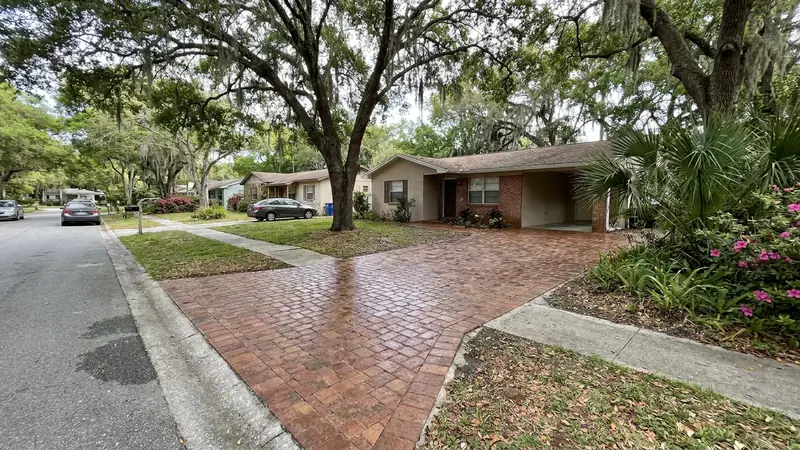
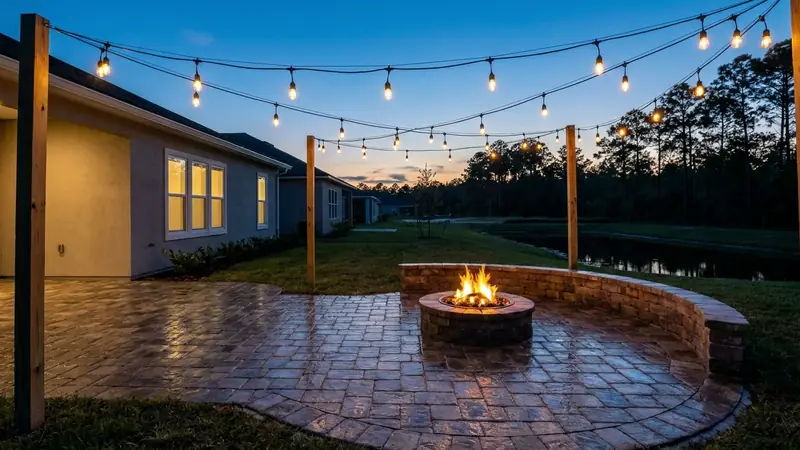
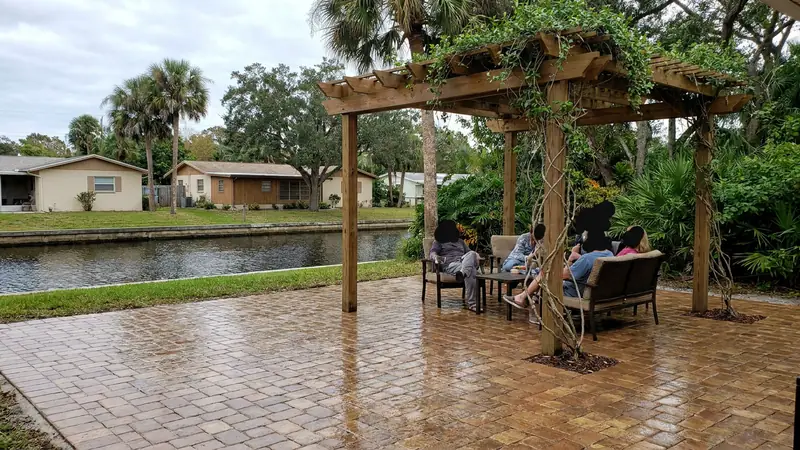
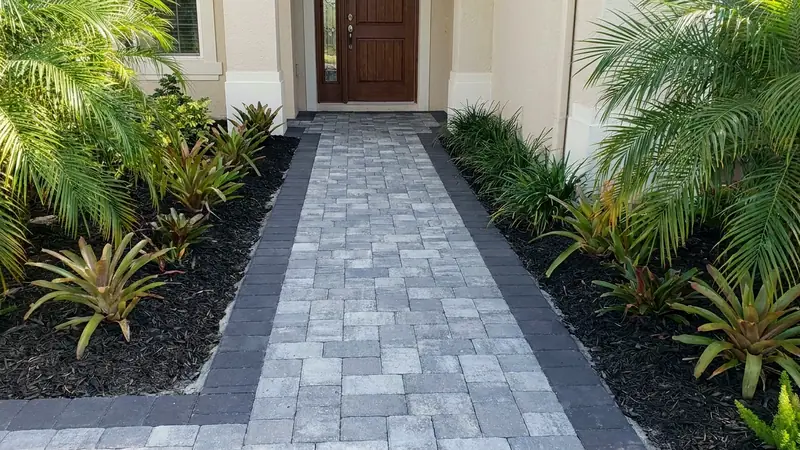
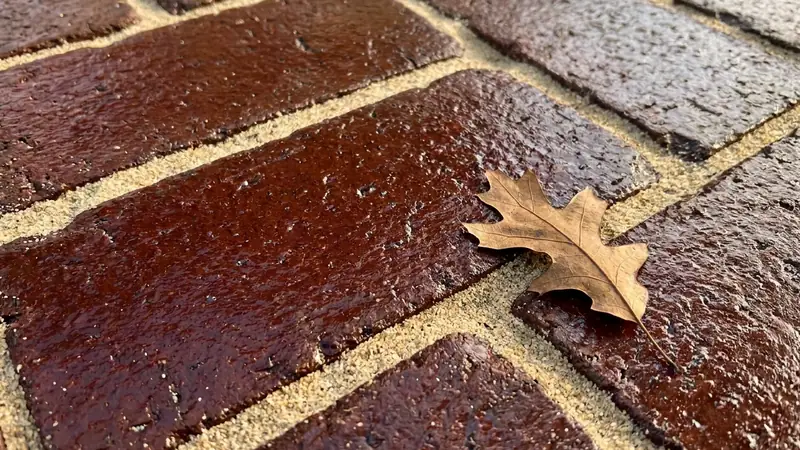
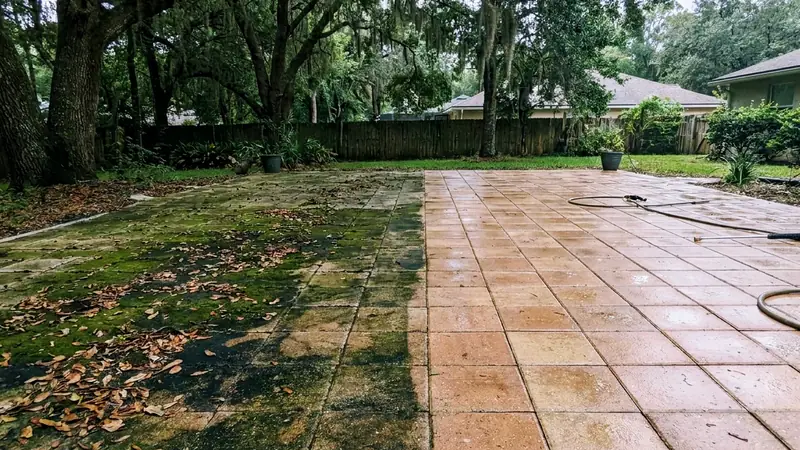
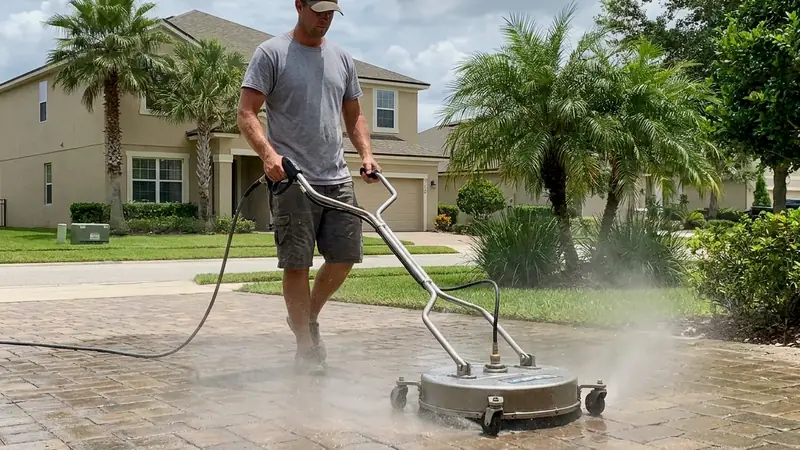
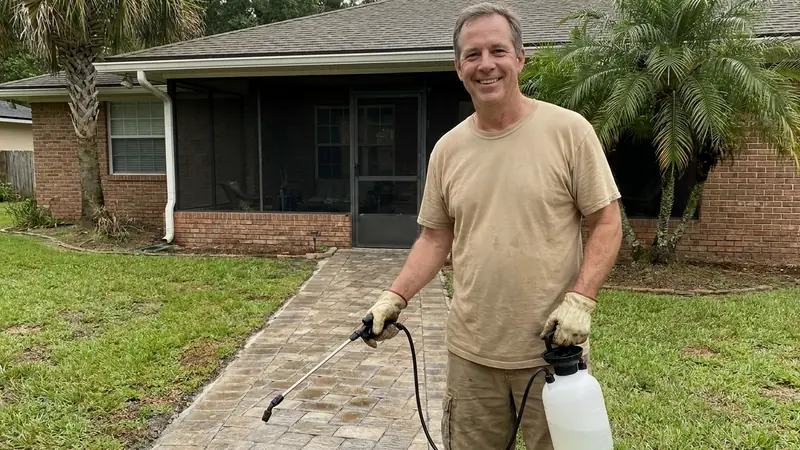
What do sealed pavers look like around Cedar Hills?
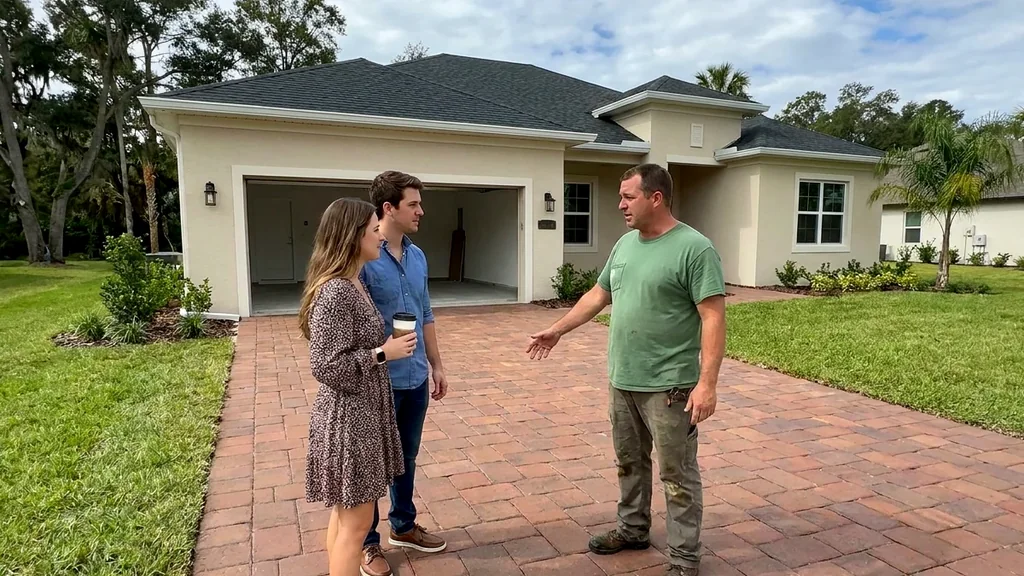
Why local matters in Cedar Hills
Cedar Hills was laid out before most of its trees were tall, and the ditches came with it. A contractor who knows the Westside understands how those drainage lines run behind the lots. Call (904) 944-6930 and describe where your water goes. The lots here are wide, which means water has room to run and collect.
A local contractor also knows the house type. Brick and block ranches sit long and low, and the pavers around them follow that layout, which makes it easy to see how much surface you have. When you are ready, ask for your free estimate.
Reaching someone close by helps when weather moves in. A contractor in town can reschedule for a dry day without losing your slot. You can talk through the plan on the phone, and then ask for your free estimate to set a time. Weather can turn quickly here from May through September.
What is Cedar Hills known for besides its ranch homes?
Cedar Hills is known for its shopping center. The 282,000 square foot Cedar Hills Shopping Center was finished in 1955, which made it one of the first large shopping districts outside Downtown. A second center, Anchor Plaza, opened on 103rd Street in 1970. For a paver job, the point is that most homes nearby are older than 60 years, so call (904) 944-6930 to ask how that affects yours.
Public places include Cedar Hills Park, renovated in 2002 and home to a public pool, and the Mary Lena Gibbs Community Center, which began as a National Guard armory in 1957. The neighborhood sits along the Cedar River, across from Lake Shore. Plenty of nearby driveways run toward the water or a ditch, so the right plan starts with a look. To set one up, ask for your free estimate.
Frequently Asked Questions
Why is paver sealing so expensive?
The bulk of the price goes to prep work rather than the product. A Jacksonville company counts 2 to 3 hours of prep for each hour spent sealing. Companies commonly publish $1.75 to $3.25 per square foot to clean, sand and seal, which covers the wash, the sand and the coating. A price listed surface by surface shows where the money goes.
How much does it cost to have pavers cleaned and sealed in Cedar Hills?
Expect the published Northeast Florida range of $1.75 to $3.25 per square foot. A wide Cedar Hills frontage means more square feet, so the total grows with the lot. A free estimate gives you the figure for your own driveway and patio.
How long do paver sealers last on a Cedar Hills driveway?
Plan on two to five years between coats, which is the range companies commonly give. A driveway in full sun and daily use wears toward the short end. Check for water that no longer beads, which is a sign the coat is thinning.
Is it good to seal pavers in Florida?
Yes. Sun, heavy summer rain and shade all work on unsealed pavers, and sealer slows faded color and joint sand loss. For a house near a ditch, holding the sand matters most. Sealing also makes the surface easier to hose off after a storm.
Can sealing stop my pavers from sinking near a drainage ditch?
Sealing helps hold joint sand, but it does not rebuild a washed-out base. Sinking and washouts lead one Jacksonville company's list of paver failures. Sunken spots are reset first, and then the coat goes on. If a drainage fix is needed, that comes before any paver work.
Is a wet look or matte better for a driveway?
Matte is the easier choice for a driveway. Wet look shows scuffs sooner and shows wear in the drive lanes. If you like the deeper color, ask for a test patch before the whole job. Matte also looks natural beside brick and block walls.
Do Cedar Hills pavers need sealing before or after the rainy season?
Before is better, since sealer needs a dry surface. Most of the rain falls from May to September. A clear stretch in spring or fall gives the pavers time to dry after cleaning.
Can the back patio and the front walkway be sealed on the same visit?
Usually yes. The contractor can price the driveway, walkway and patio as one job and plan the order of work. Each surface may call for a different sealer, so ask for the product to be named. Grouping the work usually saves a trip.
What if my Cedar Hills pavers already have old sealer on them?
The contractor checks it first, because water-based sealer cannot go over solvent-based sealer. If the old coat is peeling or white, it may need to be stripped. That step adds time, so the estimate should say so.
Will rain ruin a fresh coat on my Cedar Hills driveway?
Rain can spoil a coat that has not cured. Sealer needs a dry surface, and sealer put on damp pavers can turn cloudy white. A contractor watches the forecast and moves the day if storms are close, which happens often from May to September.
What does the contractor do about weeds in my paver joints?
Weeds come out during the wash, and fresh joint sand goes in after it. Sealing then firms the sand so weeds have a harder time returning. Sealed joint sand turns into a hard barrier that slows weeds and ants, according to a Jacksonville company.
Ready for a Free Estimate in Cedar Hills?
Call (904) 944-6930 and tell us about your pavers.
Free, no obligation